About
A research program at the intersection of AI excellence and societal responsibility.
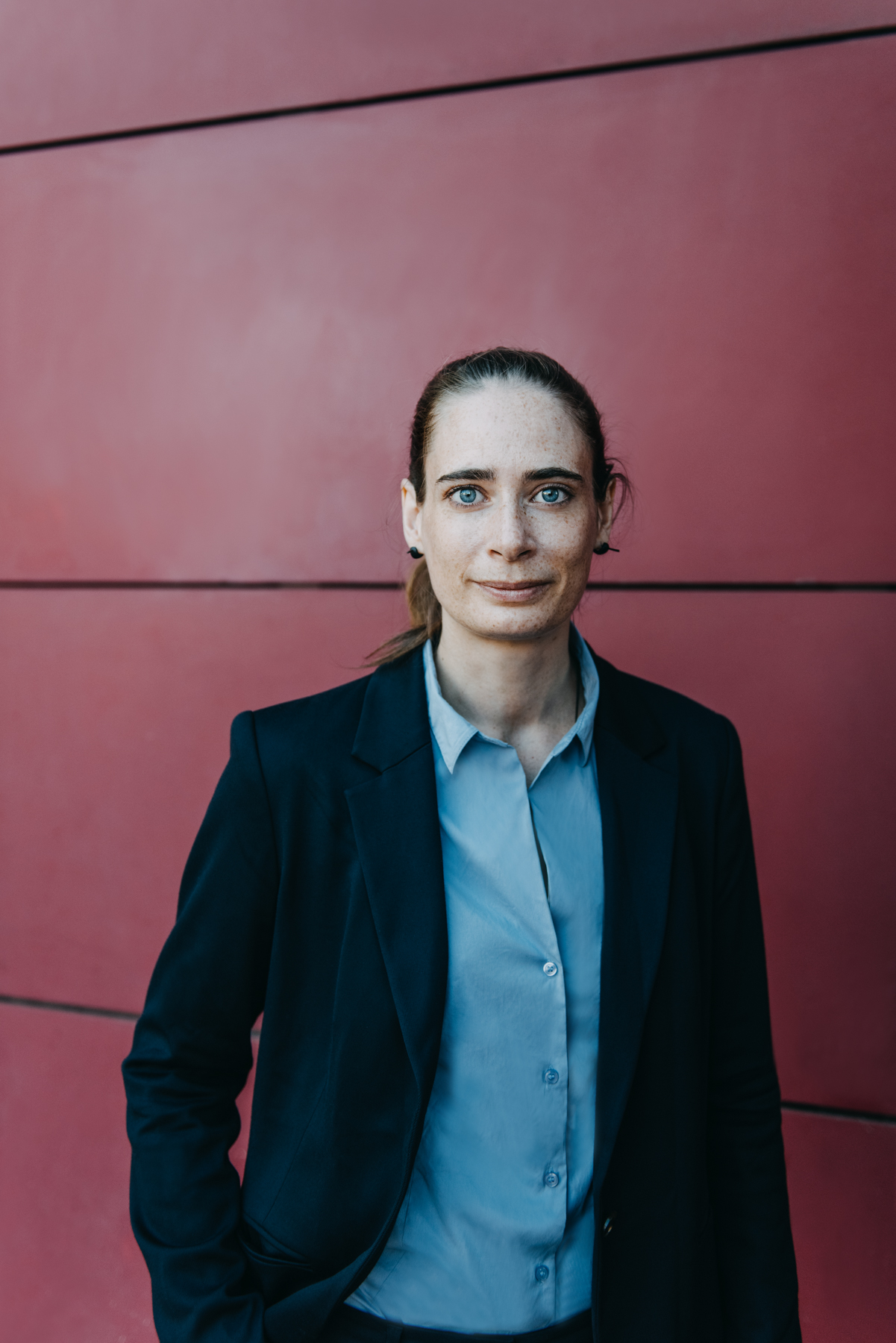
My research pursues two complementary goals: building powerful generative AI for real-world applications, and systematically studying the ethical risks such systems pose in terms like unfair and harmful biases. The overarching aim is to develop context-sensitive AI systems that are technically strong and responsibly deployable. My professorship is funded by the Excellence Initiative of the German federation and the federal states. Before starting my appointment as a Full Professor of Trustworthy Artificial Intelligence in the Department of Informatics, I was Associate Professor of Data Science at the University of Hamburg Business School. Previously, I was a Postdoctoral Researcher in the Natural Language Processing group at Bocconi University (Milan, Italy) where I was working on introducing demographic factors into language processing systems with the aim of improving algorithmic performance and system fairness. I obtained my Ph.D., awarded with the highest honors (summa cum laude), from the Data and Web Science group at the University of Mannheim (Germany), where my research focused on the interplay between language representations and computational argumentation. During my studies, I also conducted research internships at and became an independent research contractor for Grammarly Inc. (New York City, U.S.) and for the Allen Institute for Artificial Intelligence (Seattle, U.S.).
Research Areas
Core themes.
My research portfolio spans foundational questions about trustworthy AI as well as ambitious applications e.g., in the sciences.
🛡
Safe, fair, and inclusive generative AI
Studying harmful biases, discriminatory behavior, safety failures, and mitigation strategies in generative AI systems, with a focus on realistic usage scenarios and ecologically valid evaluation.
🌍
Multilingual, multicultural, and multimodal AI
Understanding how language models and their multimodal extensions (e.g., vision-language models, audio-language models, etc.) behave across languages (and smaller linguistic varieties like dialects), and cultures. Especially where benchmarks and systems have historically marginalized underrepresented communities and their knowledge.
🧠
Interpretability, benchmarking, and robustness
Developing datasets and methods to probe what models learn, where they fail and why, and how robustly they behave under contextual variation.
🔬
AI for expert domains and scientific discovery
Exploring how generative and agentic AI can support complex scientific and technical environments, including particle accelerators and laser operations, through knowledge-rich and context-sensitive system design.
Third-Party Projects
Selected third-party-funded projects.
2026–2029
E4-MALM — Evaluating, Explaining, and Enabling Ethical Multi-Agent Systems of Large Language Models
Project within the DFG Priority Programme SPP 2556. The project focuses on how unfair bias emerges and amplifies in multi-agent LLM systems, and how such dynamics can be explained and controlled.
Funder: Deutsche Forschungsgemeinschaft
2026–2033
Contested Climate Futures: Discursive Powerplay in the Media
Project within the Cluster of Excellence “Climate, Climatic Change, and Society” (CLICCS) on multimodal media analysis of climate discourse with novel efficient and fair multimodal and multilingual AI methods.
Funder: Deutsche Forschungsgemeinschaft
2025-2028
AI-Powered XFEL Laser Operations: Boosting Uptime with Language Models
Project on language-model-based support for scientific operations in complex laser infrastructure, connecting AI methods with complex technical environments.
Funder: Data Science in Hamburg - Helmholtz Graduate School for the Structure of Matter
2024
GeFMT — Gender-Fair Language in German Machine Translation
Project developing resources and methods to evaluate the gender inclusion in German machine translation.
Publications
Selected research highlights.
Research on fairness, inclusiveness, multilinguality, multimodality, interpretability, and scientific applications of AI. My full list of publications is available on Google Scholar.
Recent highlights
Greater accessibility can amplify discrimination in generative AIwith Carolin Holtermann, Minh Duc Bui, Kaitlyn Zhou, Valentin Hofmann, and Katharina von der Wense
ArXiv Pre-print
ArXiv Pre-print
SoS: Analysis of Surface over Semantics in Multilingual Text-to-Image Generationwith Carolin Holtermann and Florian Schneider
EACL 2026
EACL 2026
Large Language Models Discriminate Against Speakers of German Dialectswith Minh Duc Bui, Carolin Holtermann, Valentin Hofmann, and Katharina von der Wense
EMNLP 2025
EMNLP 2025
Multi3Hate: Multimodal, Multilingual, and Multicultural Hate Speech Detection with Vision–Language Modelswith Minh Duc Bui and Katharina von der Wense
NAACL 2025 · Outstanding Paper Award
NAACL 2025 · Outstanding Paper Award
SHADES: Towards a Multilingual Assessment of Stereotypes in Large Language Modelswith Margaret Mitchell et al.
NAACL 2025
NAACL 2025
Large language models for human–machine collaborative particle accelerator tuning through natural languagewith Jan Kaiser and Annika Eichler
Science Advances 2025
Science Advances 2025
Representative earlier work
Sensitivity, Performance, Robustness: Deconstructing the Effect of Sociodemographic Promptingwith Tilman Beck, Hendrik Schuff, and Iryna Gurevych
EACL 2024 · Social Impact Award
EACL 2024 · Social Impact Award
What about “em”? How Commercial Machine Translation Fails to Handle (Neo-)Pronounswith Debora Nozza, Ehm Miltersen, Archie Crowley, and Dirk Hovy
ACL 2023
ACL 2023
SocioProbe: What, When, and Where Language Models Learn about Sociodemographicswith Federico Bianchi, Samuel Bowman, and Dirk Hovy
EMNLP 2022
EMNLP 2022
Welcome to the Modern World of Pronouns: Identity-Inclusive NLP beyond Genderwith Archie Crowley and Dirk Hovy
COLING 2022
COLING 2022
RedditBias: A Real-World Resource for Bias Evaluation and Debiasing of Conversational Language Modelswith Soumya Barikeri, Ivan Vulić, and Goran Glavaš
ACL-IJCNLP 2021
ACL-IJCNLP 2021
A General Framework for Implicit and Explicit Debiasing of Distributional Word Vector Spaceswith Goran Glavaš, Simone Paolo Ponzetto, and Ivan Vulić
AAAI 2020
AAAI 2020
Recognition
Awards and media recognition.
My work has received recognition for both scientific quality and social impact, and has also reached broad public visibility.
Awards
Named one of the "Leading 30 German AI Experts and Academics"Global Investors Forum 2025
SAC Highlight MentionAnnual Conference of the Association for Computational Linguistics 2025
Outstanding Paper AwardAnnual Conference of the Nations of the Americas Chapter of the Association for
Computational Linguistics 2025
Social Impact Paper AwardConference of the European Chapter of the Association for Computational Linguistics 2024
Named on of the "100 Brilliant Women in AI Ethics for 2023"Women in AI Ethics 2023
Nominated for the GSCL-Dissertation AwardGerman Society for Computational Linguistics 2022
Nominated for the Dissertation Award of the German Informatics SocietyGerman Informatics Society, nomination by the University of Hamburg
Maria Gräfin von Linden-Award in den Life Sciences/STEMVerband Baden-Wurttembergischer Wissenschaftlerinnen
Distinguished Reviewer AwardConference for Empirical Methods in Natural Language Processing 2020
Selected public resonance
KI diskriminiert Dialektsprecher
Tagesschau.de · Report on our research showing that AI language models reproduce unfair stereotypes about German dialect speakers.
KI und Vorurteil - Wenn das "K" für "Klischee" steht
Quer TV show (BR) · TV program discussing about stereotypes in AI systems highlighting our research on AI-based disrimination.
Particle accelerators get an assist from AI co-pilots
Nature Research Highlight · Short research highlight on language models supporting particle accelerator tuning.
The lost data: how AI systems censor LGBTQ+ content in the name of safety
Nature Computational Science · News feature on safety filtering and disproportionate removal of LGBTQ+ content.
„KI wird unsere Gesellschaft transformieren“
Wissenschaftskommunikation.de · Interview on the AI revolution and its impact on our society.
Contact
Let’s connect.
For collaborations, invited talks, student opportunities, media requests, or research exchange, feel free to get in touch.
Legal
Impressum.
Verantwortlich für den Inhalt
Anne Lauscher
Trustworthy AI Lab
University of Hamburg
Bundesstrasse 56b
20146 Hamburg
Kontakt
anne dot lauscher at uni-hamburg dot de
Haftungsausschluss